인기 검색 계정





























Oversight Board(@oversightboard) 인스타그램 상세 프로필 분석: 팔로워 33,153, 참여율 0.8%

@oversightboard
인증됨 비즈니스Oversight Board
We make binding decisions on what content Facebook, Instagram and Threads should allow or remove, based on respect for human rights.
http://linktr.ee/oversightboard/@oversightboard님과 연관된 프로필

mgidnative

wordpress

dreamina_ai

creativecommons

metaopensource

federaltradecommission

proyouthandfamilies

icannorg

bgcmla

googleventures

updatesfromyoutube

























@oversightboard 계정 통계 차트
게시물 타입 분포
시간대별 활동 분석 (최근 게시물 기준)
@oversightboard 최근 게시물 상세 분석
이미지 게시물 분석
동영상 게시물 분석
여러 장 게시물 분석
@oversightboard 최근 게시물
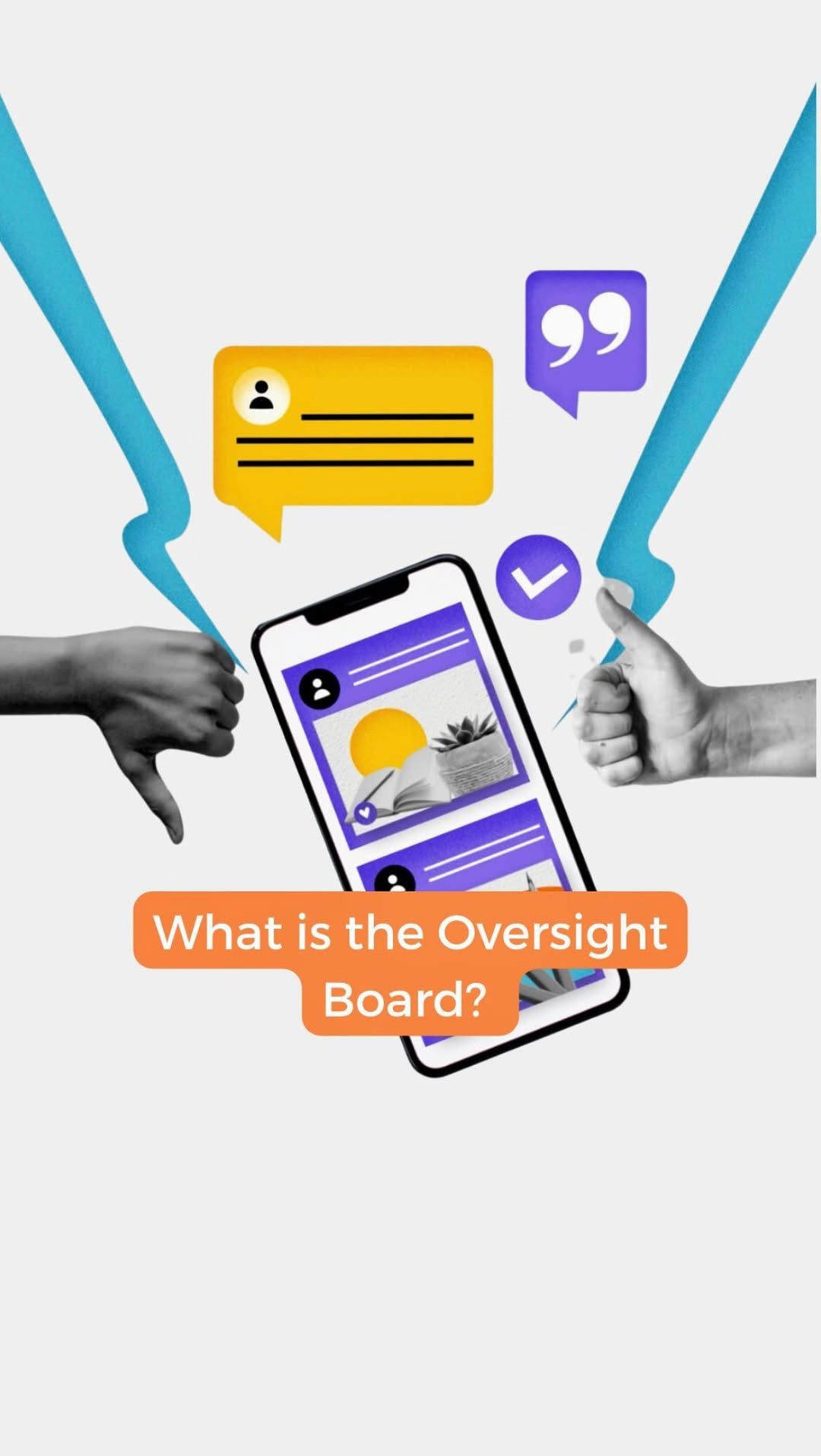
As social media platforms become an increasingly central part of our daily lives, it’s more important than ever to ensure responsible decision-making and protect free expression online. That’s where the Oversight Board comes in - we’re the independent organization made up of global experts in law, journalism, human rights, and technology who are dedicated to holding social media platforms accountable when it comes to content moderation and user rights. Our mission is to review and make decisions on appeals submitted by users or content creators who feel that their content was unfairly removed or feel someone’s content has been unfairly left up. But our role goes beyond individual cases. We also make policy recommendations and provide guidance to Meta on how to improve its content moderation practices and uphold user rights. At the heart of it all, we are committed to upholding freedom of expression while ensuring that social media platforms are held accountable for their actions. #OversightBoard #Accountability #FreeSpeech #SocialMedia #ContentModeration #UserRights
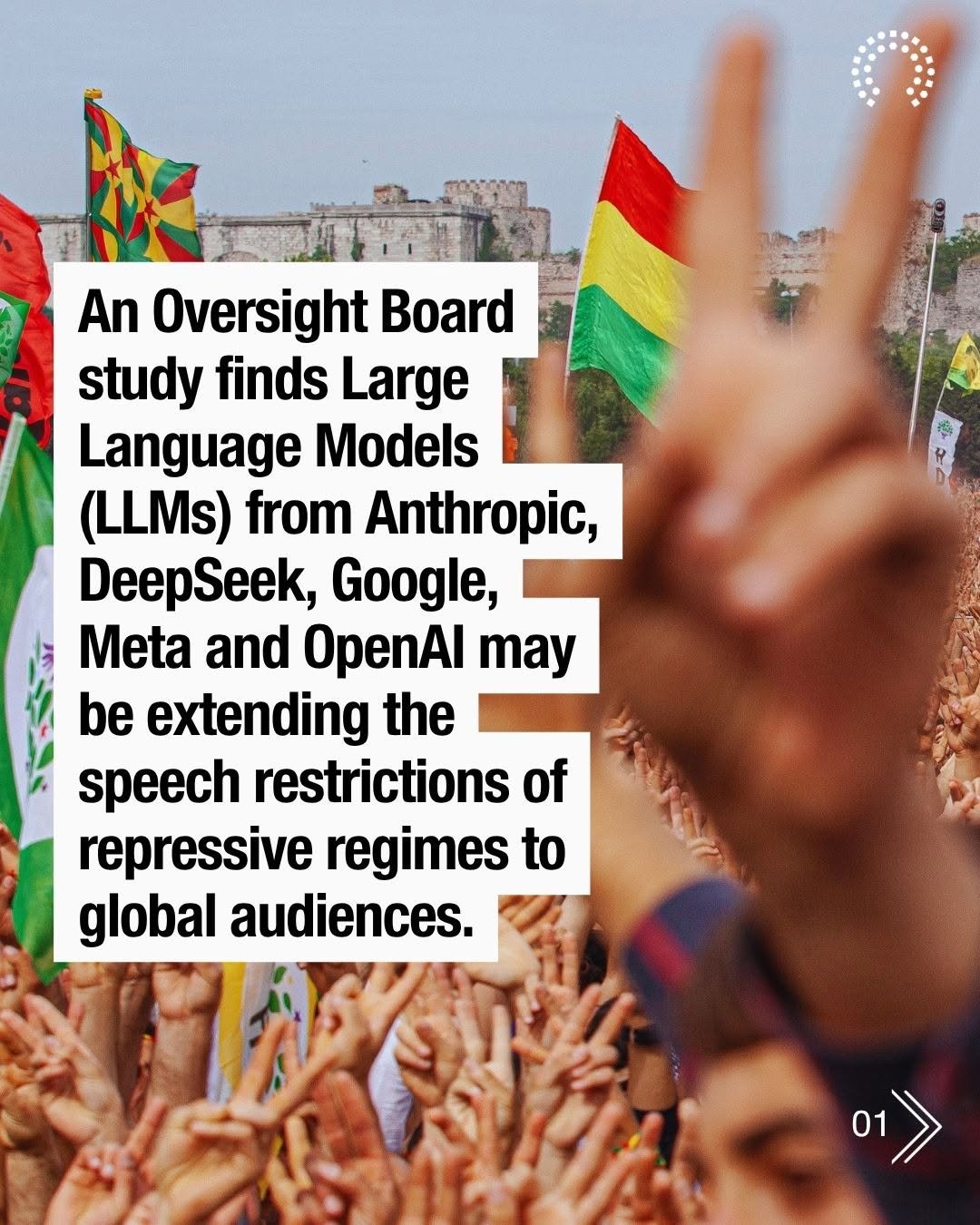
✍ The Oversight Board has published its first evaluation of leading Large Language Models (LLMs), finding that some of the world’s most-used AI systems from @claudeai, Deep Seek, @google, @meta and @openai could be reinforcing and extending the censorship laws of repressive regimes to global audiences – creating censorship by proxy and ultimately restricting the free-speech rights of all users. Across the 10 commercial models tested, AI systems refused to generate critical political content more than twice as often when asked about repressive regimes. This is despite queries being run from a location outside of these jurisdictions, where such expression is protected. The evaluation also exposed a bias when models were asked to produce opinions of governments and political leaders. In many instances, the models refused to say whether a government and leader should be “supported” or “protested.” When the models did respond, however, they were more likely to advise users against protesting restrictive governments, while encouraging support for permissive ones. To improve accountability and user awareness, the Board calls on AI companies to: 👉 Provide greater transparency on how government requirements and local legal restrictions influence a model’s development, deployment and eventual outputs. 👉 Ensure that users receive clear notifications when AI outputs have been restricted or influenced by legal obligations that may affect freedom of expression. 👉 Clearly explain when an AI model refuses a prompt based on legal requirements, including stating the specific law and relevant jurisdiction driving that refusal. 🔗 You can read the full report on our website (link in bio). 🔗 #OversightBoard #Meta #AI #Report #LLMs #FreeSpeech
“We don’t teach children how to swim by keeping them out of the water until they’re adults.” – @nighatdad This week we brought together experts across child safety, digital rights and tech policy for an insightful discussion around the impact of digital platform bans. A big thank you to our panelists - Board Members @hellethorningschmidt and @nighatdad, Afrooz Kaviani-Johnson of @unicef, Melissa Stroebel of @thorn and Andrew Zack of @familyonlinesafety, and to Co-Chair Paolo Carozza for moderating. You can watch the webinar on our YouTube channel (link in bio). #OversightBoard #Meta #Socialmedia #bans #digitalrights
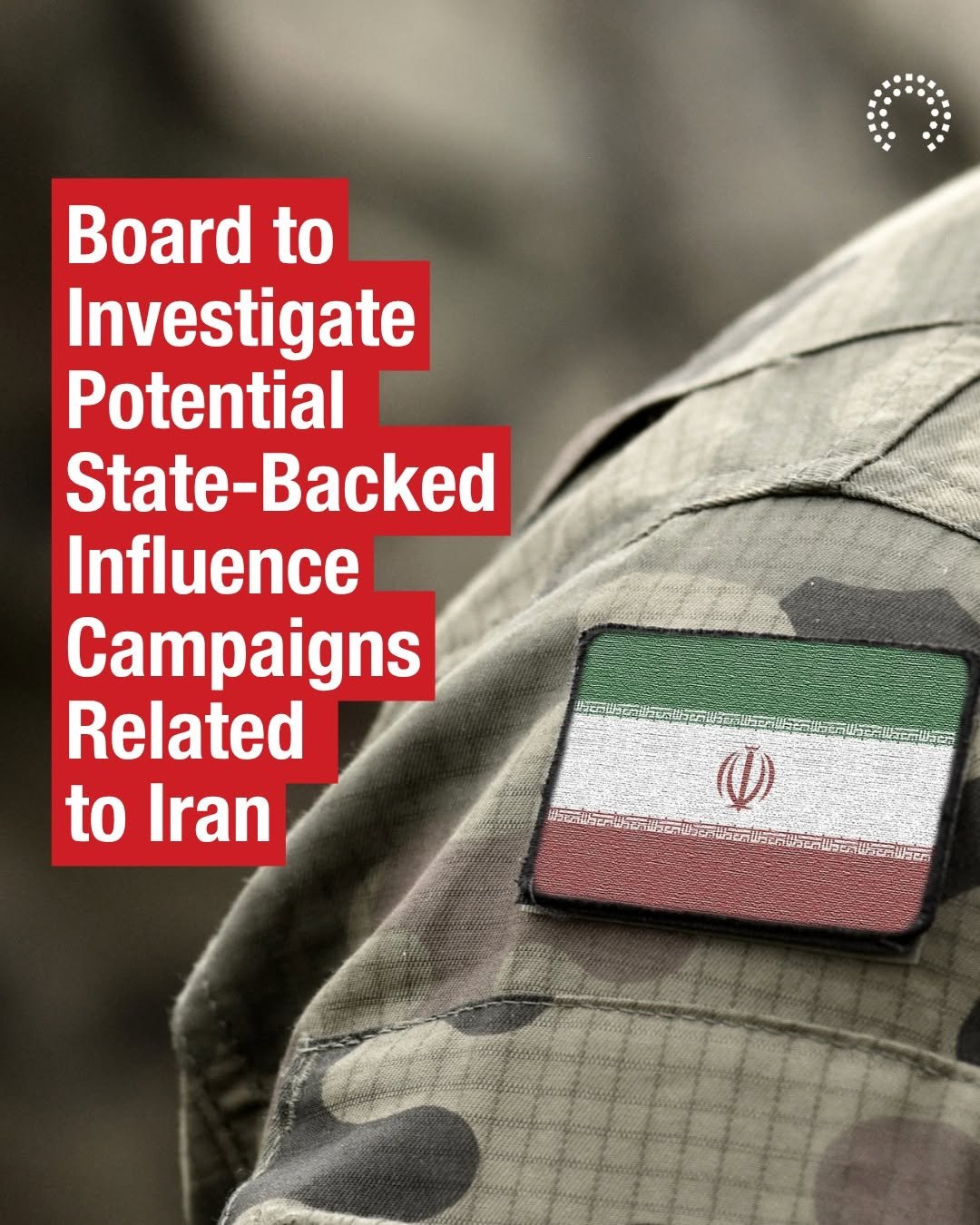
The Oversight Board has selected two cases involving content supporting Iranian government security forces. These cases will assess how Meta deals with content that could be generated by coordinated inauthentic behavior, such as state-sponsored influence operations. Both pieces of content were posted by accounts created less than two months before the content was posted and had a code in their usernames that is associated with a pro-Iranian hacking group. These signals, when combined with the nature of the content, suggest that these posts could be part of an online influence operation. Meta determined neither post violated any of its policies, leaving them on Instagram. A user then appealed to the Board, saying both posts form part of a coordinated attempt to promote and normalize violence as well as act as “coercive propaganda” which implicitly threatens Iranian dissenters. The Board would appreciate public comments that address: • How social media platforms should detect and address online influence operations, especially those carried out on behalf of states. • How state-sponsored online influence operations typically operate, especially with respect to Meta’s platforms. • The impact of pro-Iranian government propaganda and online influence operations on Iranian civilians, particularly in the context of the recent protests. • How the Iranian government and its supporters use social media, as well as whether and how they use coded threats or incitement to violence. If you or your organization feel you can contribute valuable perspectives that can help with reaching a decision on these cases, you can submit your contributions via our website before (link in bio) 23:59 Pacific Standard Time (PST) on Tuesday 14 July.
Next week, we're convening youth rights experts, digital rights advocates, and tech leaders for a timely discussion on age-based restrictions on digital platforms and what effective, rights-respecting youth protections should look like. Join us on June 30 for a virtual discussion on the impacts and realities of under-16 social media bans worldwide. We’ll hear from our own @hellethorningschmidt, @nighatdad, Afrooz Kaviani-Johnson. of @unicef, Melissa Stroebel of @thorn and Andrew Zack of @familyonlinesafety, with Paolo Carozza moderating. 🗓 Tuesday, June 30, 2026 ⏰ 11:00 AM – 12:15 PM ET ✅ RSVP (link in bio).
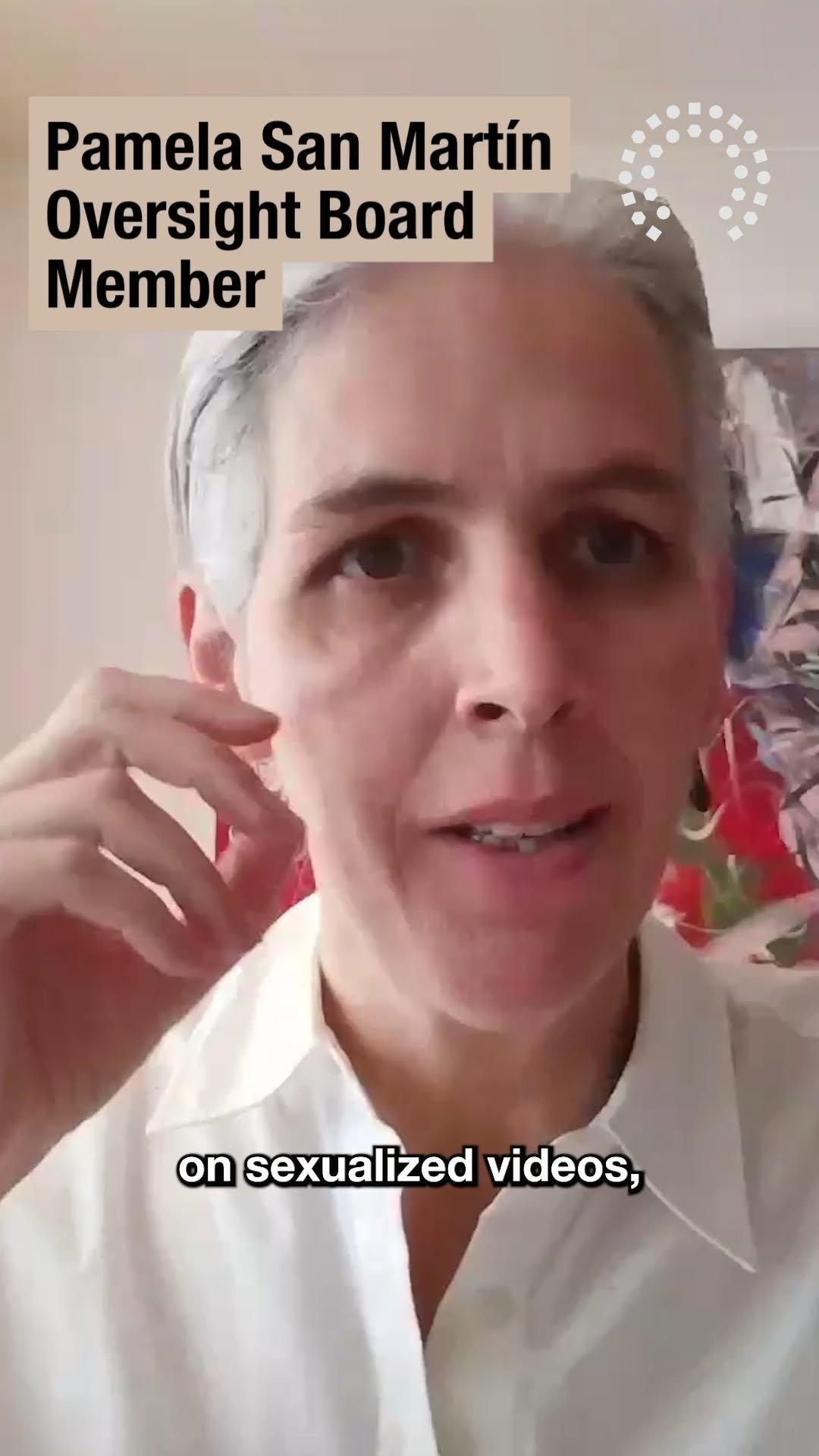
Social media platforms should treat AI-generated intimate imagery of real people as itself a signal of lack of consent. Co-Chair Pamela San Martín explains why we’re calling on Meta to strengthen protections for non-public figures who are the targets of sexualized deepfakes. #Meta #OversightBoard #Deepfakes #AI
The Oversight Board has overturned Meta’s decision to leave a reportedly AI-generated sexualized video impersonating a woman up on Instagram. The Board finds that AI-generated impersonation is non-consensual by default and should be added to the set of signals the company uses to establish lack of consent. The Board also recommends that Meta: • Allow users to designate “connected accounts,” such as trusted friends, family members or associates, that can report content on their behalf • Include AI-generated sexualized impersonation as a separate category in standard content reporting and appeal forms Find out more Thank you to everyone who submitted a public comment on this case. Please visit our website for more information on this very important case around non-consensual intimate imagery (link in bio)
The Board has selected a case involving an AI-generated video of a female campaigner who was shown giving health advice she never gave, following widespread abuse online about her appearance after a news interview. 🔍 About the case 🔍 Recently, a young woman was interviewed on the news as a volunteer for a campaign group speaking about improving women’s health education and reducing stigma around health conditions for women and girls from ethnic minority backgrounds. This footage was digitally manipulated to misrepresent her role and message, exposing her to widespread global commentary and abuse about her appearance across multiple social media platforms. Find out more about the case on our website (link in bio). ✍️Submit your public comments and have input into our work✍️ The Board would appreciate public comments that address: • The sources, prevalence and impact of AI-generated content that mocks or harasses people, especially targeting women and girls participating in public discussions or engaging in human rights advocacy when they are not public figures. • How to accurately enforce rules against AI-generated harassment, especially targeting non-public figures, while respecting freedom of expression and avoiding over-enforcement of legitimate social and political commentary. • Barriers women and girls face in sharing or accessing reproductive health information on social media platforms. • How social media companies’ design choices can reduce the prevalence of mass harassment and the potential for it to go viral. • Best practices for platforms seeking to help people targeted by "unwanted manipulated imagery,” including Meta’s limitations on the policy for manipulation of how a person looks (rather than what they are seen doing or saying) and the suitability of the requirement that victims must self-report. The public comment window is open for 14 days, closing at 23:59 Pacific Standard Time (PST) on Thursday 2 July.
The Oversight Board has overturned Meta’s original decisions to remove five pieces of content containing slurs that were used in a self-referential or positive context. Meta initially removed the content for violating its Hateful Conduct policy. Under the Hateful Conduct policy, Meta removes content that “describes or negatively targets people with slurs.” Slurs are defined as “words that inherently create an atmosphere of exclusion and intimidation against people on the basis of a protected characteristic, often because these words are tied to historical discrimination, oppression and violence.” In the policy rationale, Meta states that slurs are allowed when used self-referentially or in an empowering way. Meta notes that slurs only qualify for such exceptions when the user’s intent is clear. Slur reclamation is where members of a stigmatized group reappropriate derogatory terms, promoting self-acceptance and fostering group solidarity. By reclaiming these terms, communities seek to strip them of their power to harm, reshaping them into symbols of strength and pride while reclaiming the right to define themselves on their own terms. After the Board brought the appeals to Meta’s attention, the company reversed its original decisions and restored all five posts. This bundle demonstrates ongoing issues with the company’s ability to enforce exceptions to this policy for the use of slurs in self-referential and/or positive contexts. For more information, visit our website (link in bio).
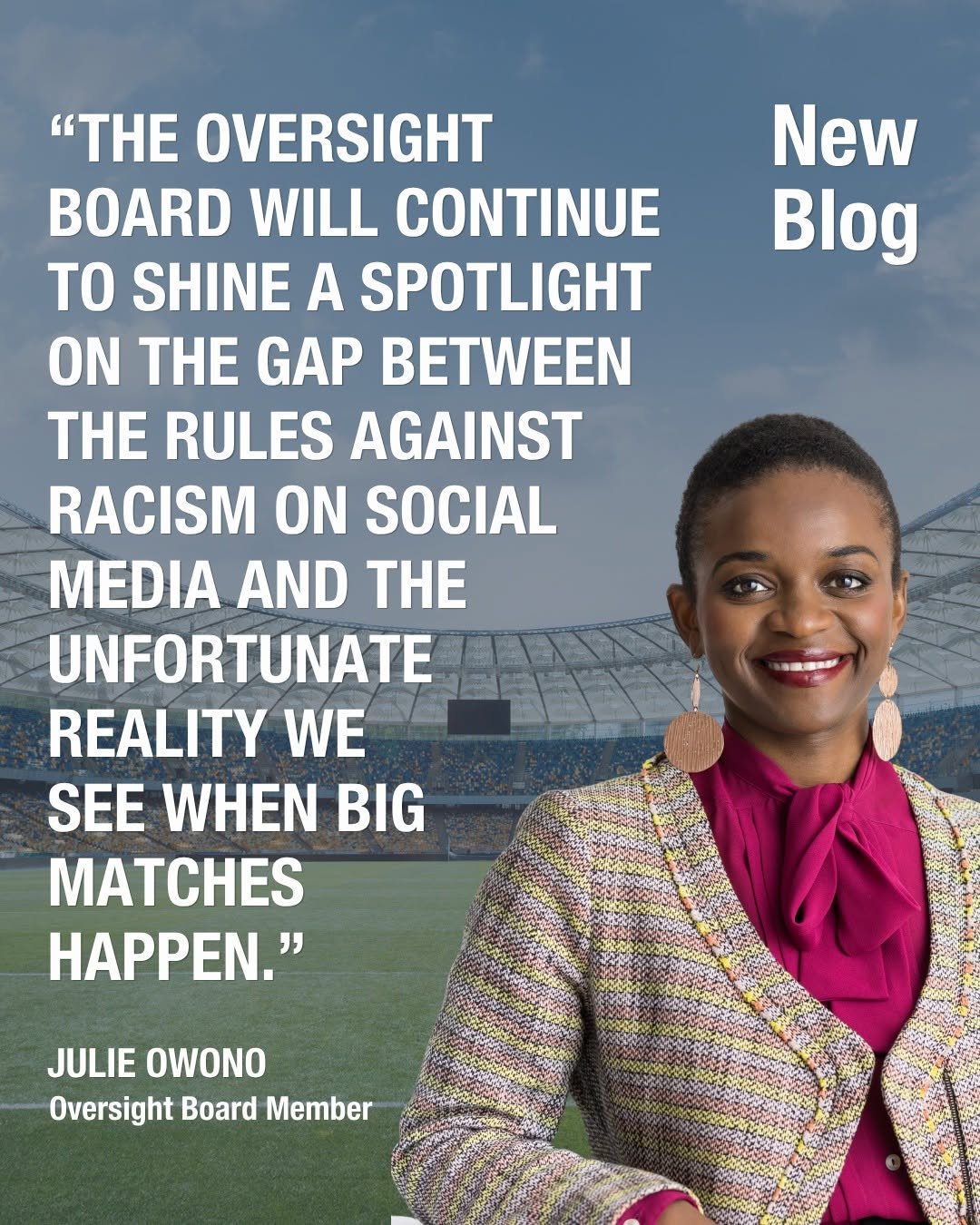
As the 2026 FIFA World Cup kicks off and we celebrate the beautiful game, we must not forget there is an uglier side: racist abuse and hate speech on social media that targets athletes, supporters and other users. Board Member @julieowono has written a blog responding to Meta's action on emoji-based racism, after we called on the company to improve its automated and human review processes. Read the blog on the link in our bio. #Meta #OversightBoard #WorldCup #SayNoToRacism
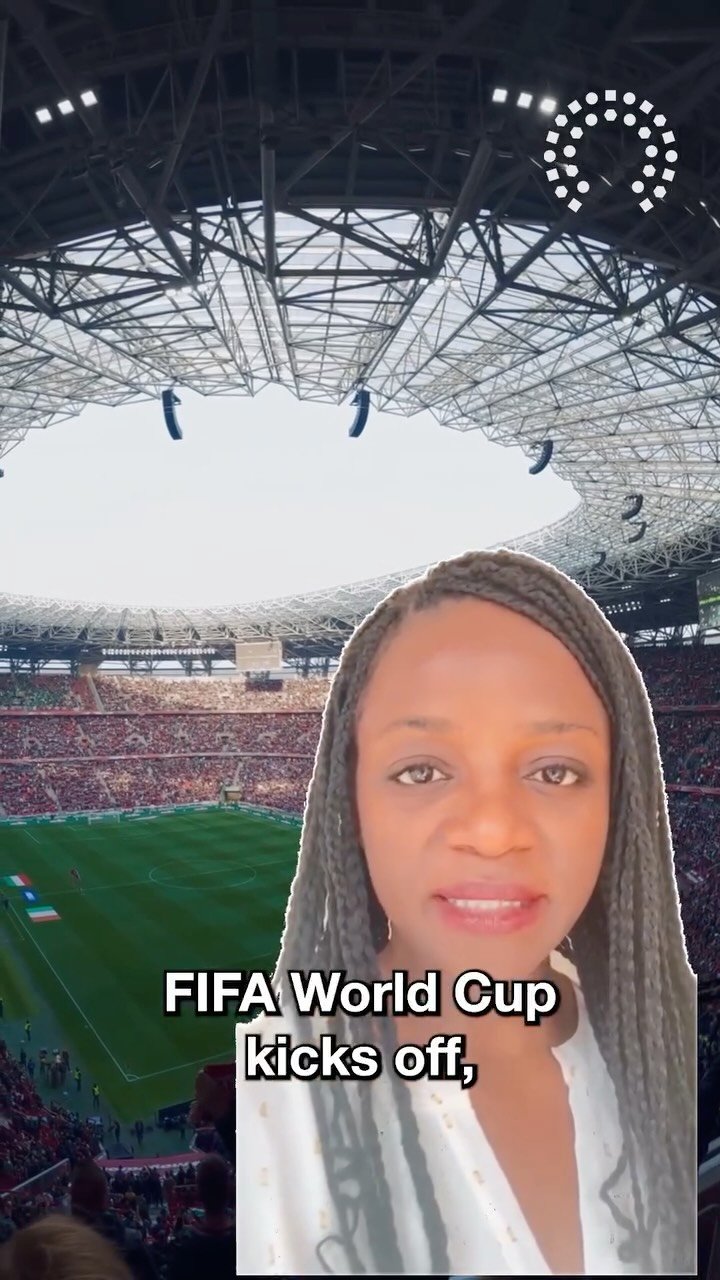
Racist abuse and hate speech unfortunately increases on social media during sporting events such as the FIFA World Cup. Board Member Julie Owono responds to Meta's action on emoji-based racism. #Meta #OversightBoard #WorldCup #ViniciusJunior #SayNoToRacism #FIFAWorldCup #Fifa
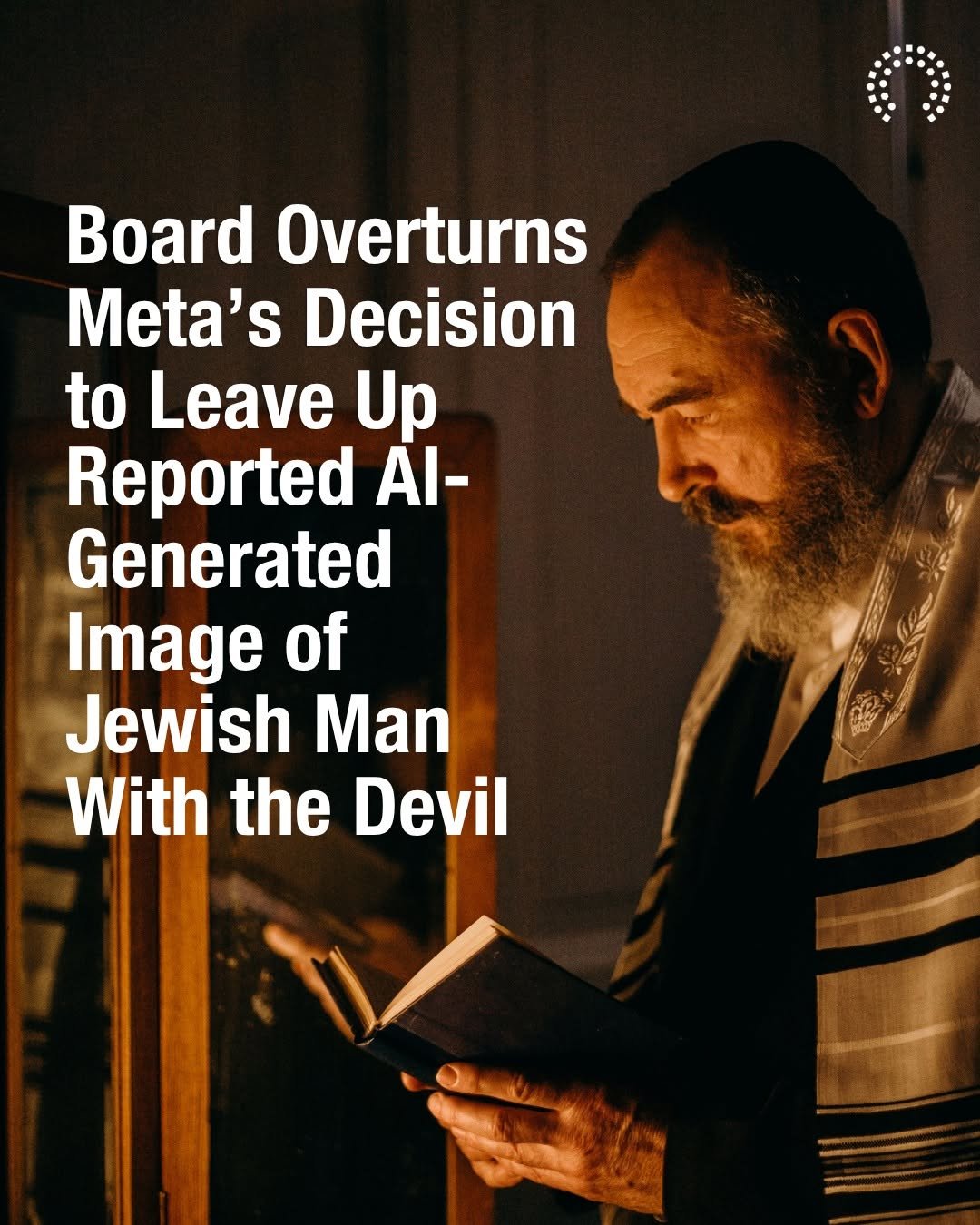
The Oversight Board has overturned Meta’s original decision to leave up a digitally created image on Facebook portraying a Jewish man laughing with the devil. The caption states: “There is no evil force on this planet that is not enabled by Jews” and that Jewish people blackmail politicians, media figures and authorities. In their appeal to the Board, the reporting user stated that the image is an “AI-generated picture” and that the posting user “is constantly posting antisemitic content.” The content is an example of the underenforcement of Meta’s Hateful Conduct policy. It illustrates how harmful stereotypes targeting Jewish people can appear in both visual and textual forms and how such content may evade enforcement despite violating the policy. After the Board brought the appeal to Meta’s attention, the company reversed its original decision and removed the post. For more information on this case, visit our website (link in bio). #OversightBoard #Meta #ContentModeration